Roof replacement debris generates immense density, meaning cubic yards alone do not determine the proper container size. A standard bundle of three-tab asphalt shingles weighs 60 to 80 pounds, while architectural…
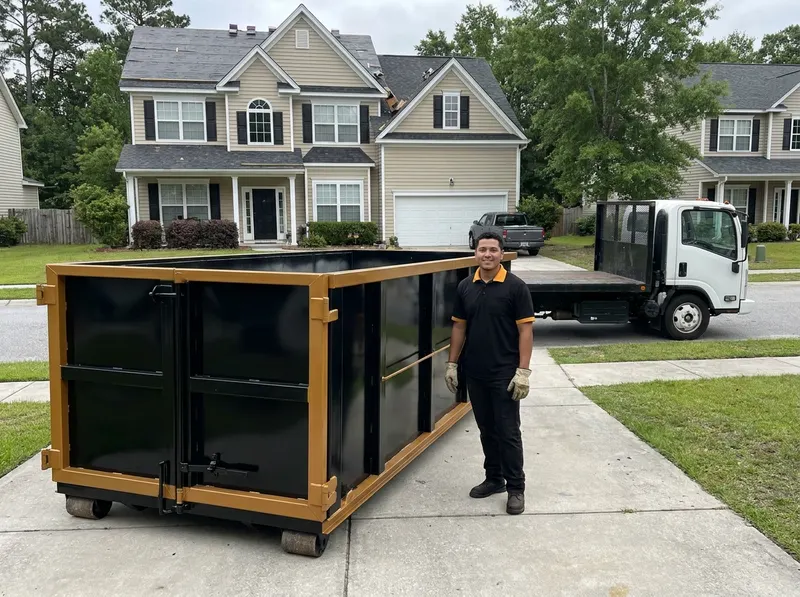
Roof replacement debris generates immense density, meaning cubic yards alone do not determine the proper container size. A standard bundle of three-tab asphalt shingles weighs 60 to 80 pounds, while architectural shingles weigh 70 to 90 pounds per bundle. Because 100 square feet of roofing equals one roofing square (three bundles), a 25-square tear-off creates roughly 5,250 to 6,750 pounds of dense debris. If the tear-off involves a double layer, that weight doubles instantly to over 11,000 pounds. Choosing a 10-yard or 15-yard roll-off container matches the legal road-weight limits of a dual-axle haul truck, whereas overfilling an excessively large 30-yard container with shingles can surpass road-weight thresholds and result in heavy municipal overload penalties at Chatham County weigh stations.
Savannah's local geography introduces specific placement constraints that require tactical staging. In historic areas like the Victorian District, Starland District, and Ardsley Park, shared brick-paved driveways, overhead live oaks, and narrow alleys require precise roll-off positioning so roofing crews can toss shingles directly from the eaves into the container walls. Placing protective 2x10 wooden boards beneath the container's steel rollers isolates the pressure, preventing the steel wheels from sinking into sandy coastal topsoil or cracking decorative aggregate driveways in Gordonston and Isle of Hope. Coastal properties across Wilmington Island and Skidaway Island frequently deal with afternoon coastal thunderstorms; having a low-profile roll-off parked directly beneath the roofline minimizes waterlogged shingles that artificially inflate disposal weight.
A common misunderstanding involves confusing volume-based junk removal with weight-based construction disposal. Roofing debris must be handled by heavy-spec roll-offs designed for dense inert materials, not general debris bins with low weight thresholds. When staging near Hunter Army Airfield or through commercial districts along Southside, local right-of-way ordinances require street-placement permits if the container cannot fit entirely inside a private driveway. A brief three-step intake confirms the exact container fit: step one involves measuring the total roofing squares and counting existing roof layers; step two pairs those dimensions to a 10-yard or 15-yard container with a matched tonnage cap; step three schedules drop-off positioning so labor crews can run chutes straight from the roof deck into the container.
Every job gets a firm, written price after a free on-site visit.
Tell us about your roofing tear-off dumpster rental job in Savannah and we'll send a clear, written quote, usually the same day.
 Canyon Ridge Dumpster Rental