Securing an equipment rental service Savannah contractors and homeowners trust keeps teardown sites organized and prevents bulky waste from halting ongoing construction schedules. A dependable equipment rental service delivers durable open-top containers sized specifically for construction materials, storm debris, and interior renovations.
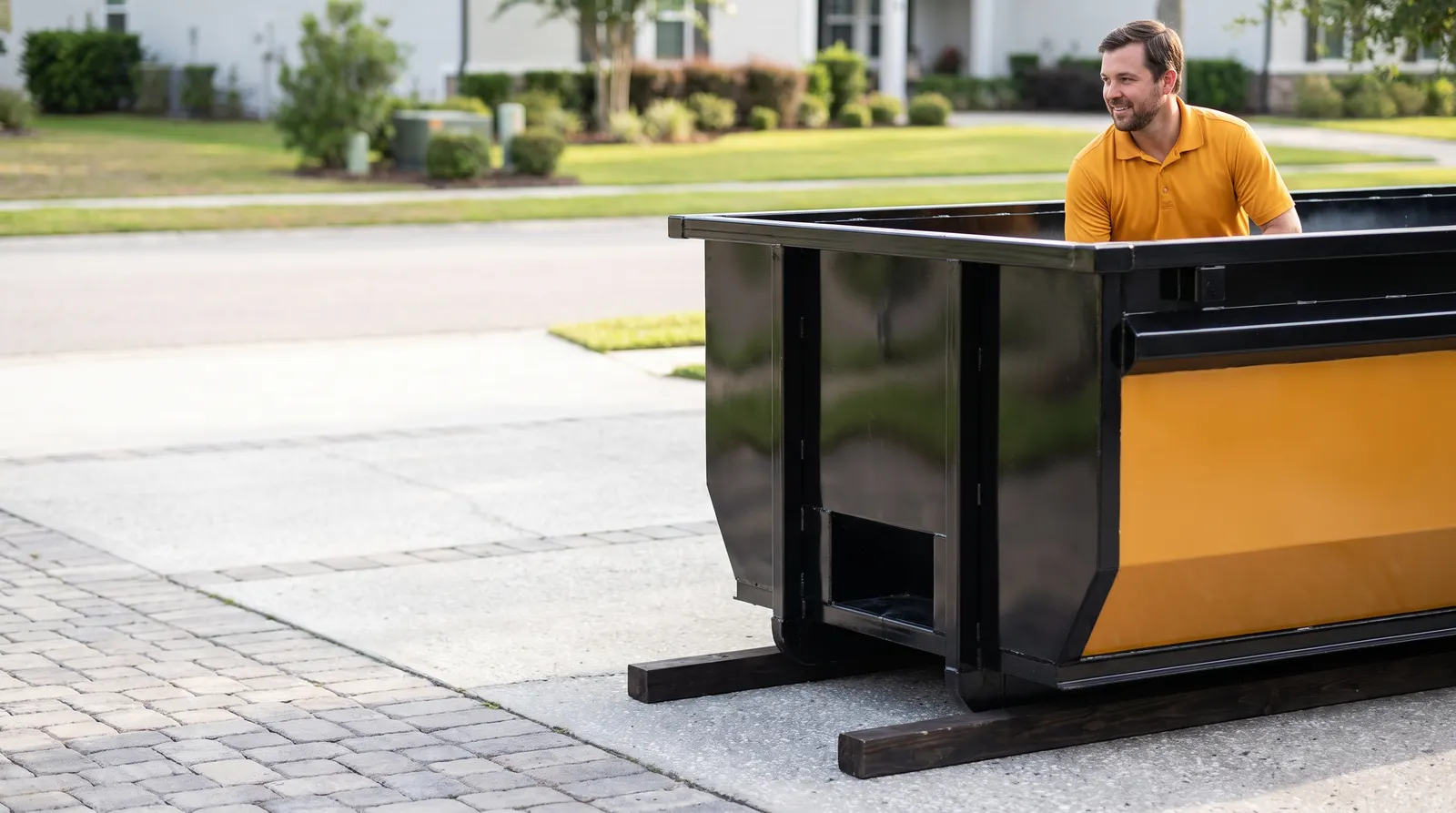
An equipment rental service company in Savannah is a dedicated roll-off container provider that delivers driveway-safe waste management bins directly to residential and commercial job sites across Chatham County.
Every service reflects the same meticulous attention to detail, whether it's a single job or a larger equipment rental service project across Savannah.
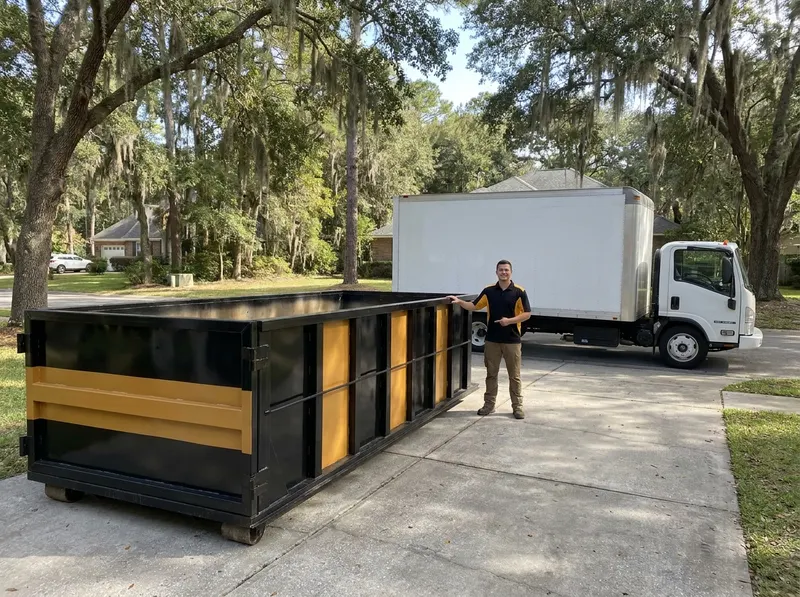
The 10-yard roll-off container measures roughly 12 feet long, 8 feet wide, and 3.5 feet high, designed to hold up to 1 ton of residential debris. This compact footprint suits garage cleanouts, half-bath updates, and small landscaping jobs across compact parcels in Gordonston and Ardsley Park. Low sidewalls permit quick manual loading from the sides without overhead lifting strain. Ground-contact points rest entirely on protective wood blocking to shield concrete pads from contact marks. Homeowners tackling weekend storage clearouts or single-room carpet removals favor this footprint because it leaves room for family vehicles to pull into the remaining driveway bay without parking along narrow municipal curbs.
Get a quote →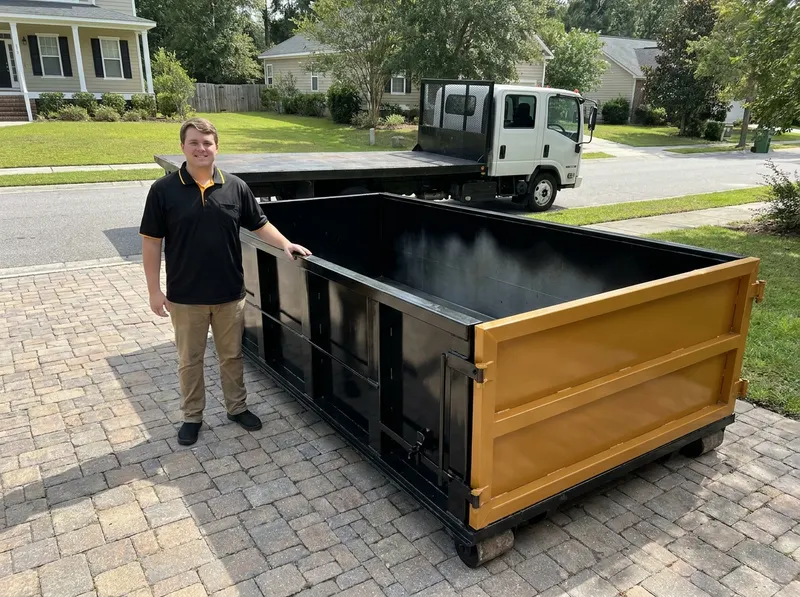
A 15-yard dumpster provides roughly 14 feet of length and 4.5 feet of sidewall height, accommodating up to 1.5 tons of construction or household discards. This size serves dual-room carpet removals, drywall replacement tasks, and medium-scale yard clearings. The container occupies the space of a single passenger vehicle, allowing contractors to park on residential driveways while preserving vehicle access along narrow residential streets. The intermediate sidewall profile lets workers heave broken plaster, old lumber, and bathroom fixtures over the side while maintaining a manageable rear-gate entry angle for rolling heavy wheelbarrows directly into the box.
Get a quote →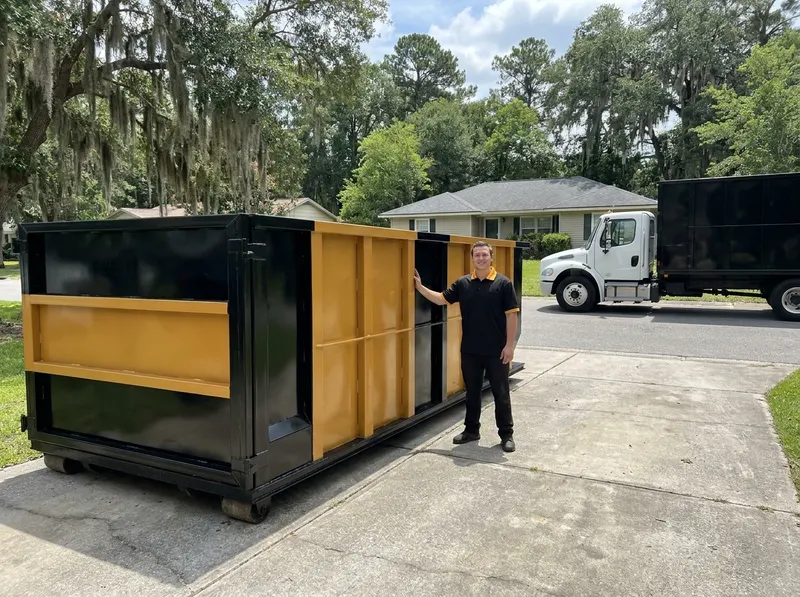
The 20-yard roll-off container measures 22 feet in length and 4.5 feet in height, handling up to 2 tons of interior renovation debris, cabinetry, and flooring. It serves as the standard workhorse for general remodeling, siding replacements, and multi-room deck tear-offs. Back swinging doors swing fully open on hinge pins, allowing heavy materials like framing lumber and sheetrock to be walked straight into the bin with a hand truck. Its moderate height balances high capacity with an accessible exterior edge, making it the most requested size for historic home rehabilitation projects and rental turnover cleanouts across Savannah.
Get a quote →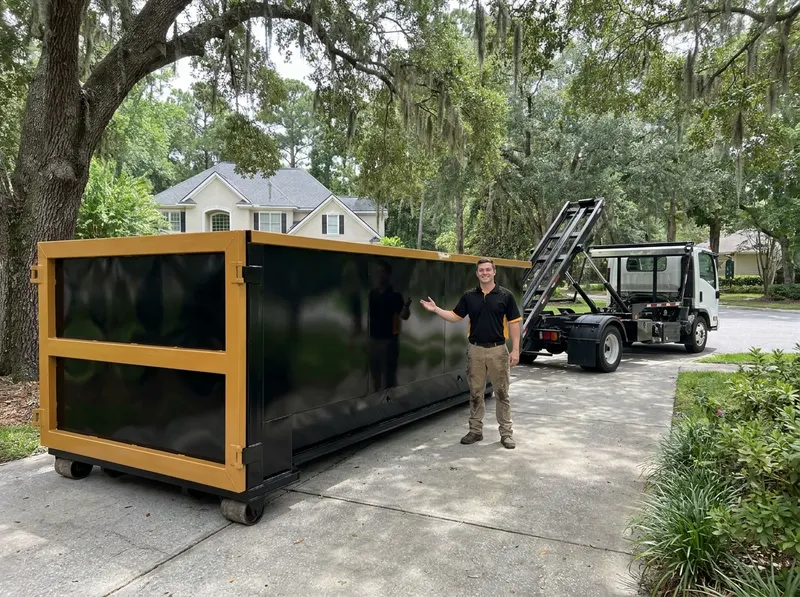
Designed for heavy-volume jobs, the 30-yard dumpster stands 6 feet high and 22 feet long, engineered to hold up to 3 tons of bulky construction and demolition debris. It accommodates estate cleanouts, full-house window retrofits, framing tear-offs, and commercial retail renovations. High sidewalls keep tall items contained during loading, while reinforced steel floor runners evenly distribute physical loads on firm asphalt or compacted soil pads. Demolition crews clearing extensive dry rot, roof decking, or structural framing count on this high-capacity box to keep active workspaces orderly and free of trip hazards without requiring continuous haul swaps.
Get a quote →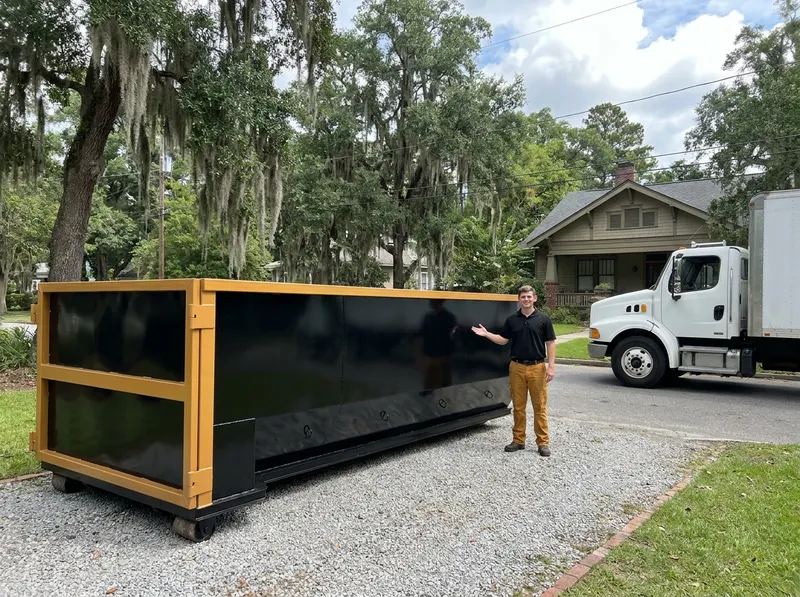
The 40-yard roll-off container spans 22 feet in length with 8-foot sidewalls, supporting 4 to 5 tons of non-compacted C&D waste. It fits complete structural demolitions, commercial roof removals, and warehouse cleanouts near industrial corridors like the Port of Savannah Garden City Terminal. Loading proceeds via the rear latching door to pack large timber beams, metal studs, and packaging materials securely below the top rail. Industrial facilities, logistics centers, and large-scale general contracting firms utilize these maximum-volume units to handle steady bulk waste output while maintaining efficient site operations.
Get a quote →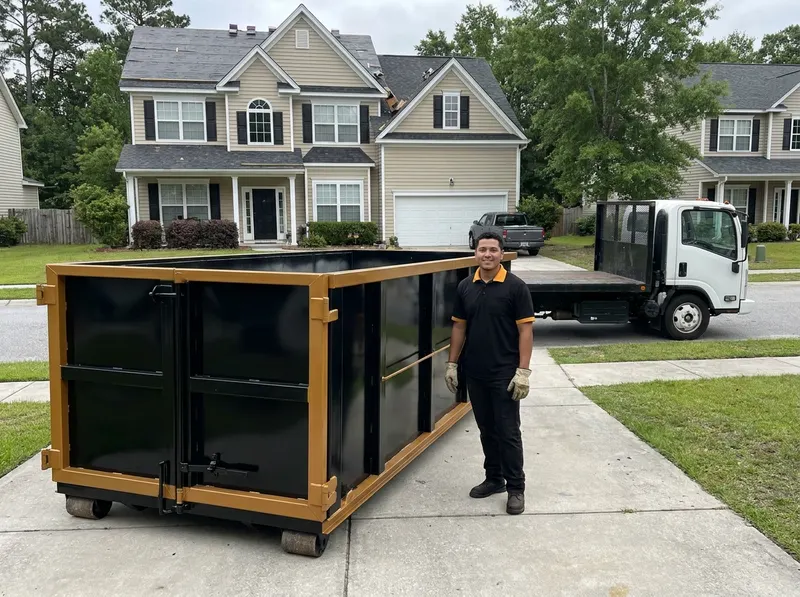
Specialized roofing dumpsters accommodate dense asphalt shingles, slate, and tar paper tear-offs with dedicated weight allocations to prevent vehicle overload violations. Standard 15-yard and 20-yard bins accommodate typical 20-to-40-square residential reroofs without exceeding transport bridge limits. Dispatchers coordinate drops and quick swap-outs directly alongside the roofline to keep old decking and nails off walkways and lawn turf. The heavy steel gauge easily withstands sharp shingle edges and recurring roof debris strikes during fast-paced tear-off jobs in the spring and storm seasons.
Get a quote →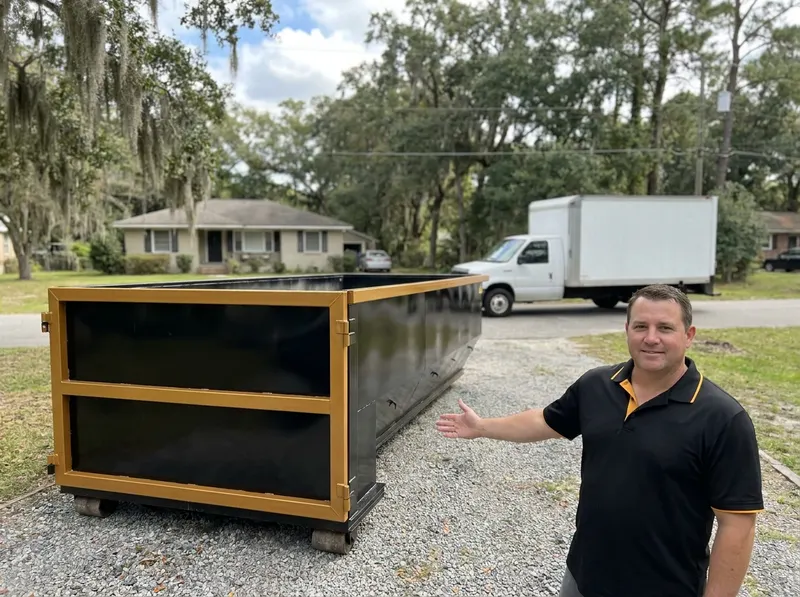
Dedicated inert materials containers carry broken concrete slabs, masonry brick, pavers, and fill dirt originating from foundation prep and driveway replacements. Because heavy aggregates weigh approximately 1 ton per cubic yard, these rentals utilize low-walled 10-yard steel bins filled only to the specified waterline. Clean masonry sorting avoids municipal transfer contamination fees and allows for direct recycling processing. Haulers transport these dense loads directly to regional rock crushing yards and aggregate recyclers, keeping recyclable mineral waste out of Chatham County landfills.
Get a quote →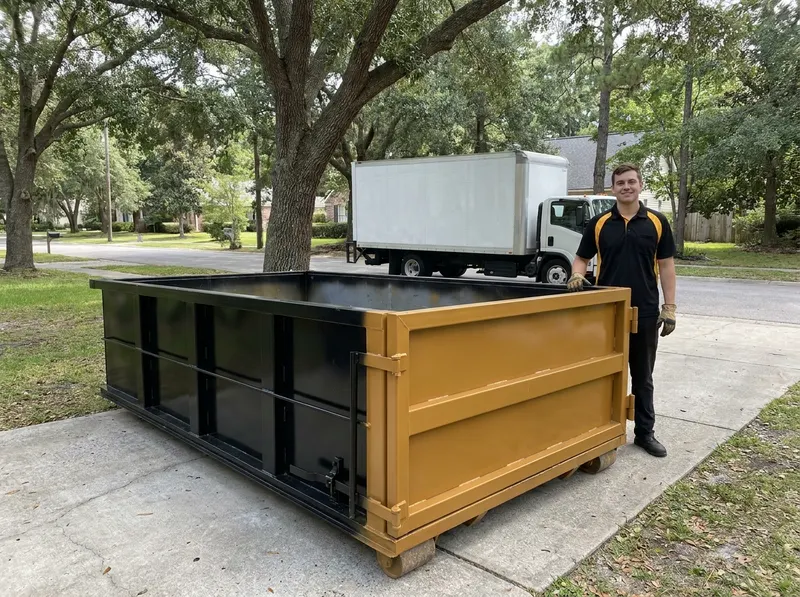
Ongoing commercial accounts support retail builds, tenant refits, and multi-stage developments across Chatham County with customized haul schedules. Project foremen schedule recurring swap-outs, staging multiple containers on job sites to separate wood, drywall, and recyclable scrap metal. Flat-rate billing profiles and predictable delivery arrival windows prevent job delays when construction crews are operating on tight inspection deadlines. Dedicated dispatch account managers coordinate container swaps in lockstep with framing, rough-in, and trim-out milestones.
Get a quote →You get a firm, itemized quote for your equipment rental service before any work begins, no surprises, no pressure.
Careful prep, tidy work, and a full cleanup when we are done. We treat your home and belongings like our own.
The same trusted, background-checked team from the first call to the final check.
Selecting the right roll-off container requires matching structural debris volume and total weight against physical site space. A 10-yard container holds approximately 4 standard pickup truck beds of waste and fits comfortably in narrow downtown driveways or parking pads near the Historic District and Victorian District. If the project involves a whole-home clearout or a full kitchen demolition, a 20-yard container accommodates roughly 8 pickup loads without monopolizing curb space.
When a commercial site or major roofing tear-off generates dense bundles of shingles or framing lumber, a 30-yard roll-off provides the needed depth and a 4-ton allowance. The primary trade-off rests between surface footprint and tonnage capacity: selecting a smaller bin saves driveway clearance but risks overage fees if heavy plaster, ceramic tile, or damp roofing felt exceeds the baseline weight limit, whereas choosing a larger container requires a clear, 60-foot pull-in trajectory for delivery trucks while minimizing swap-out delays. For dense materials like broken concrete, brick, mortar, dirt, and wet sand, physical volume is deceptive because a small pile can reach vehicle gross weight limits rapidly; placing heavy aggregate in a standard high-sided container will exceed Georgia Department of Transportation axle weight limits, meaning these specific jobs require dedicated low-profile 10-yard inert containers filled strictly to the rim line.
Conversely, bulky but light materials such as discarded sofas, wooden fencing, foam insulation, and hollow cabinets consume cubic yardage long before approaching tonnage limits, making high-sided 30-yard or 40-yard boxes the economical pick by eliminating the operational cost of multiple mid-job hauling runs. Evaluating your driveway incline, street width, overhead utility line clearance, and the exact physical density of your waste materials before placing your order guarantees seamless site drops without costly dry-run fees or property impact.
Every project gets a firm, written price after a free on-site visit. Ranges below for orientation.
Tell us about your equipment rental service job and we'll send a clear, written quote, usually the same day. Or just call and talk to a real Savannah pro.
(912) 724-7439
Savannah's high coastal water table and sandy Lowcountry soils require careful container placement, particularly near tidal waterways on Wilmington Island, Skidaway Island, and Isle of Hope where soft turf can sink under loaded steel wheels. In historic areas like the Victorian District and near Forsyth Park, narrow side alleys and low-hanging live oak canopies draped in Spanish moss demand precision truck backing and street-use permits from the City of Savannah Mobility and Parking Services when placing containers on the street. Summer humidity and tropical downpours during the June to November hurricane season also mean open containers quickly collect rainwater, so heavy tarping protocols are used to avoid paying excess weight fees caused by soaked building debris. Delivery routes frequently pass along Harry S. Truman Parkway, Interstate 516, and DeRenne Avenue, navigating active morning tourist traffic, school zones, and commercial freight lines tied to the Port of Savannah Garden City Terminal. Ground stabilization remains essential across low-lying Southside parcels, where unpaved driveway shoulders soften following standard afternoon summer squalls, making our standard wooden wheel-blocking system crucial for preventing rutting, subgrade displacement, and turf shearing during drop-offs and roll-off winch retrievals.
Free estimates for Savannah & the surrounding area.
 Canyon Ridge Dumpster Rental